
XLPE vs PVC Cable Insulation: Which Should You Choose?
For fixed low-voltage power cables, choose XLPE when the design needs its higher conductor temperature rating and the connected equipment can accommodate it. PVC can be a suitable choice when its specified rating meets the load and installation requirements. An XLPE vs PVC comparison should cover the complete cable, including its outer sheath and the conditions used to calculate its current rating.
The familiar comparison is 90°C for many XLPE-insulated designs and 70°C for general-purpose PVC-insulated designs. These are conductor temperatures in service, not permitted ambient temperatures. They are also common ratings rather than universal limits for every compound.
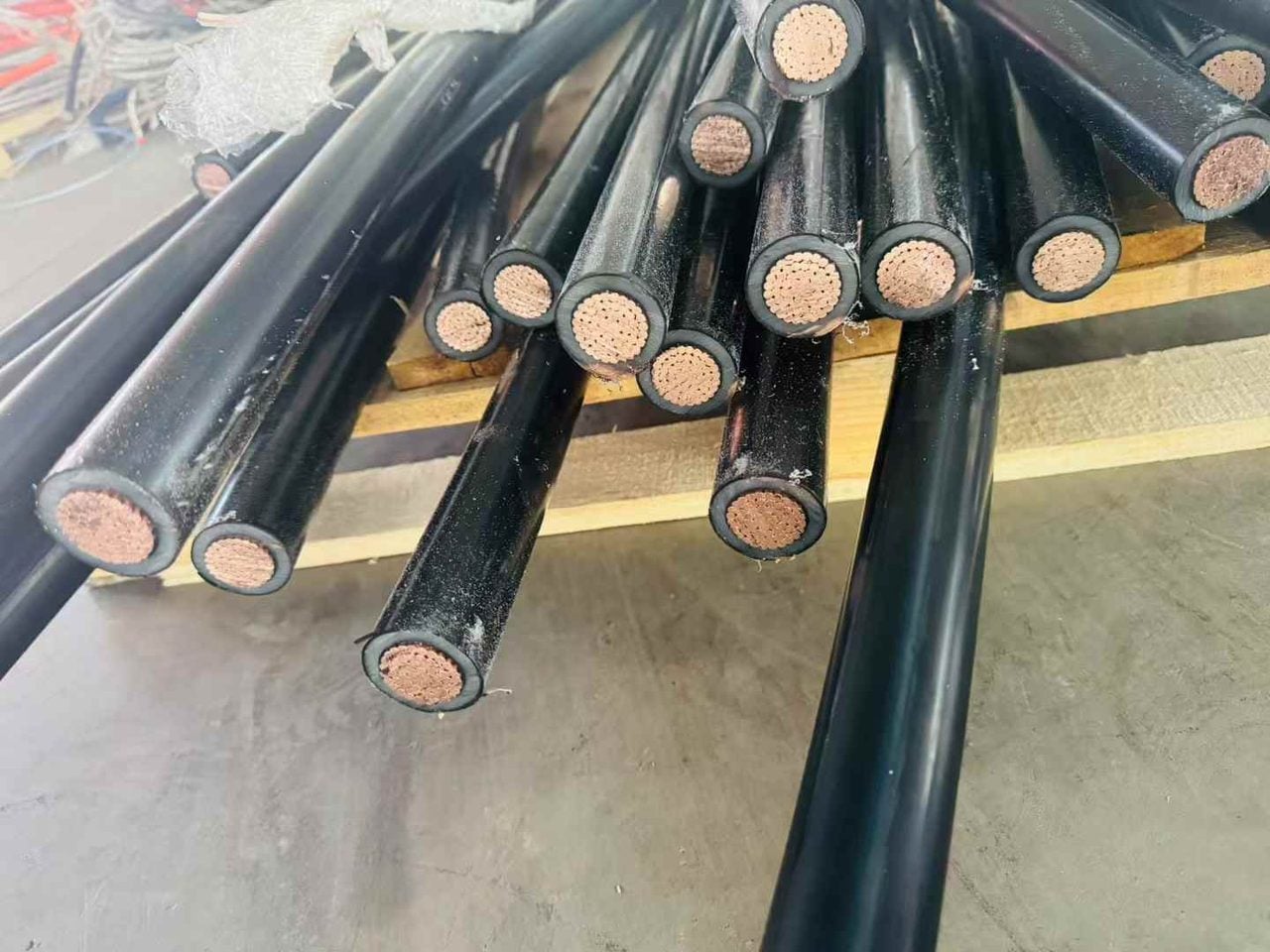
XLPE vs PVC at a glance
| What you are comparing | XLPE insulation | General-purpose PVC insulation |
|---|---|---|
| Material | Cross-linked polyethylene, a thermosetting material | Polyvinyl chloride, a thermoplastic material |
| Common continuous conductor temperature | 90°C in many power cable designs | 70°C in many general-purpose designs |
| Possible outer sheath | PVC, halogen-free compounds or another specified material | PVC or another material allowed by the cable design |
| Main selection question | Can the circuit use the higher thermal rating? | Does the specified rating meet the circuit requirements? |
Special PVC compounds can have higher ratings. For example, Nexans lists both 70°C PVC and 90°C PVC installation-wire types. Check the cable designation and datasheet before assigning a temperature limit from the material name alone.
Separate the insulation from the outer sheath
Insulation surrounds a conductor and provides the electrical barrier. The outer sheath covers the assembled cable and provides protection appropriate to its design. The two layers can use different materials.
A construction written as Cu/XLPE/PVC describes copper conductors, XLPE insulation and a PVC outer sheath. Cu/PVC/PVC describes copper conductors with PVC insulation and a PVC sheath. In Cu/XLPE/PVC, PVC forms the sheath; in Cu/PVC/PVC, it is used for both insulation and sheath. Prysmian’s low-voltage copper cable catalogue gives examples of these constructions.
An inquiry for an “XLPE cable” therefore leaves the sheath open. Ask for the layer description or construction drawing. A black exterior or a photograph of a cut end cannot establish the polymer formulation.
What the temperature rating changes
PVC used in conventional cable insulation is thermoplastic: it softens with heating. Cross-linking gives XLPE a thermoset structure with greater thermal stability. This is why a higher continuous conductor temperature is common in XLPE power cable designs. Eland Cables explains the relationship between insulating materials and operating temperature.
The higher permitted temperature can allow a higher current rating for an otherwise comparable cable and installation. It does not create a fixed percentage increase that can be applied to every XLPE vs PVC quotation.
Current rating also depends on conductor material and size, the number of loaded conductors, cable arrangement and how heat leaves the cable. Ambient temperature, grouping, ducts and soil conditions can change the result. Schneider Electric’s cable sizing guidance treats these installation conditions separately.
Connected equipment can impose a lower temperature limit than the insulation permits. A 90°C cable rating alone does not establish that a switchboard, terminal or accessory can accept a conductor operating at that temperature. The IET discusses this constraint in its comparison of thermoplastic and thermosetting armoured cables.
For a buyer, the useful comparison is the allowable current under the same stated installation conditions and equipment limits. Cable size still needs to satisfy the project’s voltage-drop and fault requirements as well as its continuous load.
Check fire requirements for the complete cable
XLPE insulation does not, by itself, make a cable low smoke zero halogen. An XLPE-insulated cable with a PVC sheath still contains a halogenated material. If the project requires an LSZH construction, the bedding, sheath and other relevant non-metallic components need to match that requirement.
Flame propagation, smoke emission and continued circuit operation during a fire are different performance questions. For example, IEC 60332-1-2:2025 concerns vertical flame propagation on a single wire or cable. Its public scope explicitly warns that a single-cable result does not establish the corresponding performance of cables installed as a group.
An XLPE vs PVC choice cannot replace the project’s required fire classification or test evidence. Request the stated test or classification for the proposed cable construction, rather than accepting “fireproof” as a material description.
Read the installation data before ordering
Check the permitted installation temperature and minimum bending radius for the actual cable. Conductor construction, cable diameter, armour and sheath design affect handling; “PVC is flexible” or “XLPE is stiff” is too broad to specify a cable route.
Outdoor exposure and wet locations also need their own checks. Confirm the proposed cable’s suitability for sunlight, water exposure, burial and any relevant chemicals. The insulation name alone does not confirm that the finished cable is suitable for all of those conditions.
Keep handling limits separate from operating limits. A cable that can remain in service in cold conditions may have a different minimum temperature for pulling or bending during installation. Nexans’ temperature guide distinguishes these conditions and directs installers to the product datasheet.
Compare complete offers before choosing
Ask suppliers to quote against the same conductor material and nominal cross-section, number of cores, voltage rating, sheath, armour and quantity. Confirm the applicable product standard and edition. Where IEC 60502-1 is specified, its published scope covers construction, dimensions and tests for the stated fixed-installation power cable voltage classes; it is not a substitute for installation design.
If the proposed XLPE option uses a different conductor size, compare the two circuit designs before comparing the price per metre. The change may affect terminations, voltage drop, fault performance and the installation. An insulation substitution alone does not justify reducing the conductor size.
Choose the PVC design when it meets the specified duty and installation requirements. Choose the XLPE design when its thermal capability is needed and the complete circuit can use it, or when the project specification requires that construction. There is no useful universal price or service-life percentage attached to the insulation names.
For an XLPE vs PVC inquiry, include the cable construction and route conditions alongside the electrical requirements. Farwalk Cable’s power cable RFQ checklist helps assemble the remaining information for a comparable quotation.
Recent Posts
October 31, 2026
Cable Storage and Handling: From Receipt to Installation
October 30, 2026
Copper vs Aluminium Cable Conductors: What Changes in an Order
Inquiry
Request a Cable Quote
Tell us the cable type, standard, voltage, conductor size, quantity and application. Our team will review your requirement.