Flexible Cable Construction
Rubber-sheathed construction supports bending, handling and mobile equipment connection routes.

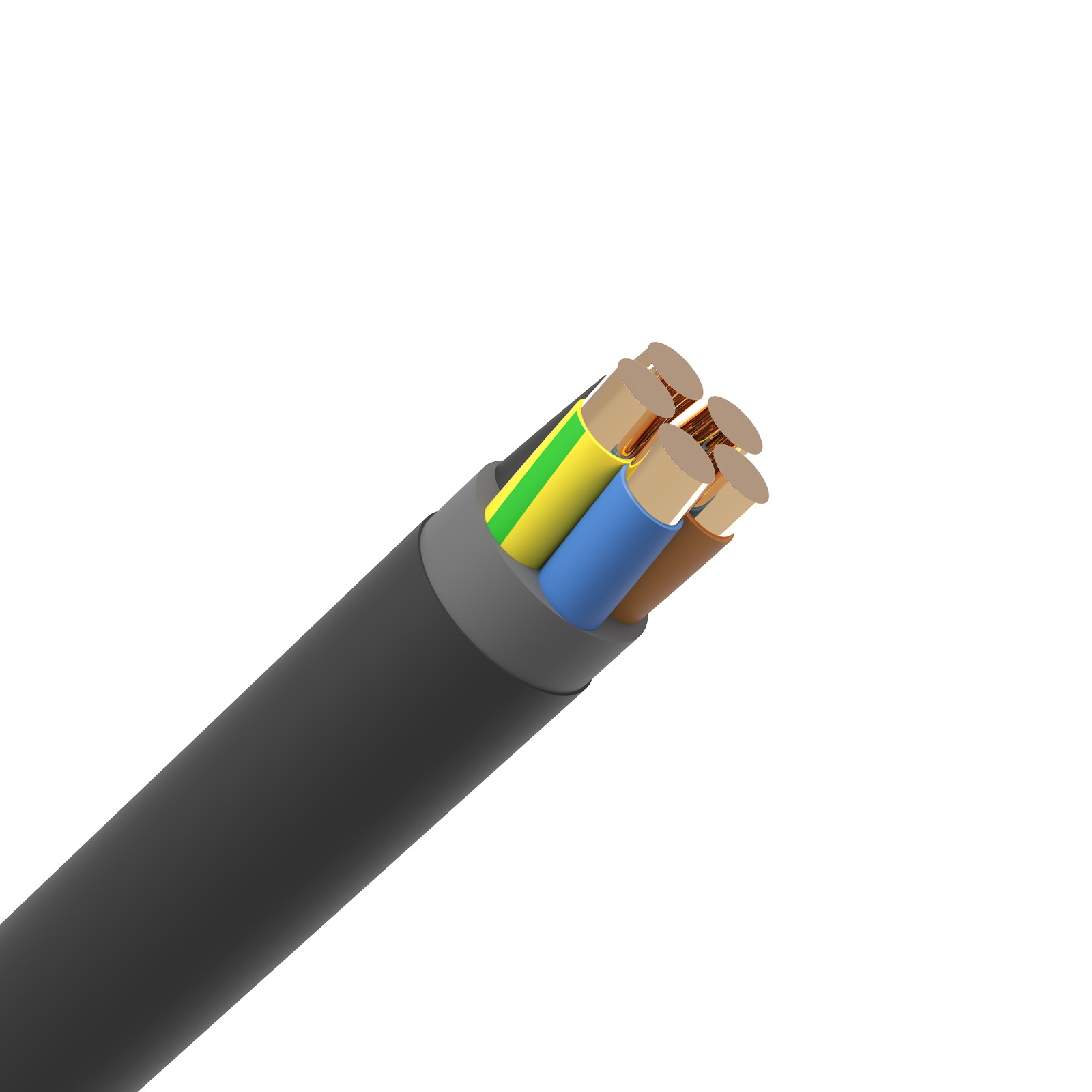
Flexible Rubber Cable for flexible industrial, outdoor and equipment connection routes.
Flexible Rubber Cable is reviewed for flexible power and equipment routes where rubber sheath performance, bending, abrasion and environmental exposure matter.
Flexible Rubber Cable should be selected according to the actual project route, not by product name alone. Before quotation, review voltage rating, flexibility level, sheath compound, movement duty, abrasion exposure and equipment connection method. Datasheet wording, compliance documents and final supply notes should stay aligned with the selected standard and installation conditions.
Flexible copper conductor with rubber insulation and rubber or neoprene sheath according to cable type. Conductor class, sheath compound, voltage grade, oil/weather resistance and bending requirements should be checked before production.
FARWALK CABLE – Flexible Rubber Cable – [standard] – [voltage] – [core x size] – [year] – [meter mark]
Rubber-sheathed construction supports bending, handling and mobile equipment connection routes.
Sheath material should be reviewed for abrasion, moisture, oil, sunlight and mechanical stress.
For Flexible Rubber Cable, voltage rating, conductor size, core count and flexibility level should match the equipment and route length.
Confirm whether the cable is light-duty, heavy-duty, welding, flat moving or portable industrial service.
Review bending, dragging, repeated handling, festoon movement or equipment travel before choosing construction.
Check oil, moisture, sunlight, abrasion, temperature and chemical exposure before selecting sheath material.
Match conductor size, voltage rating and core count to equipment load, route length and duty cycle.
| No. of Cores x Cross Section (mm²) | Max. Conductor Wire Dia. (mm) | Nominal Outer Dia. (mm) | Approx. Weight (kg/km) | Current Rating @ 30°C (Amps) |
| H07RN-F Flexible Multi-Core Rubber – 450/750V | H07RN-F Flexible Multi-Core Rubber – 450/750V | H07RN-F Flexible Multi-Core Rubber – 450/750V | H07RN-F Flexible Multi-Core Rubber – 450/750V | H07RN-F Flexible Multi-Core Rubber – 450/750V |
| 3 x 1.5 | 0.26 | 11.2 | 190 | 18 |
| 3 x 2.5 | 0.26 | 13.2 | 275 | 26 |
| 4 x 2.5 | 0.26 | 14.5 | 340 | 26 |
| 5 x 2.5 | 0.26 | 16.0 | 415 | 26 |
| 3 x 4.0 | 0.31 | 15.5 | 390 | 34 |
| 4 x 4.0 | 0.31 | 17.0 | 485 | 34 |
| 4 x 6.0 | 0.31 | 19.5 | 650 | 44 |
| 4 x 10 | 0.41 | 24.5 | 1050 | 61 |
| 4 x 16 | 0.41 | 28.5 | 1480 | 82 |
| 4 x 25 | 0.41 | 34.5 | 2150 | 108 |
Our technical team is ready to discuss customized cable solutions, compliance documentation, and optimized supply chain strategies for your international projects.
REQUEST A QUOTE